Europe Border Checks Could Get Slower After 6 September
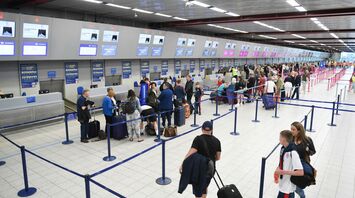
Travellers entering the Schengen area could face longer waits at passport control once the current EES biometric-relief window expires after 6 September 2026. The temporary rule lets participating countries pause biometric registration at individual border crossings for up to six hours when queues become excessive. As of 5 September, no formal extension has been announced, while the Entry/Exit System itself remains fully operational.
EES has been fully deployed at external Schengen borders since 10 April 2026, after a six-month rollout that began on 12 October 2025. It records passport details, entry and exit dates, fingerprints and facial images for most non-EU visitors on short stays. The European Commission said on 1 September that the system had broadly worked well over summer, while acknowledging that some border crossings still need adjustments.
Who the EES Change Affects
- Where: External borders of the 29 European countries using EES.
- Who: Most non-EU short-stay visitors, including British passport holders.
- Change: The temporary biometric-suspension period runs through 6 September; unless extended, the extra flexibility disappears afterwards.
- Exempt: EU citizens and nationals of Iceland, Liechtenstein, Norway and Switzerland; holders of residence permits or long-stay visas; qualifying family members and several other exempt categories.
- Before travel: No EES application is required.
There is no fee or online EES registration to complete before travelling. At the border, first-time users have their passport details and biometric data registered, while later crossings normally involve a quicker verification against the stored record. If your trip connects through a Schengen airport, leave more time at the first external border point, where immigration checks are normally completed before an onward flight within Schengen.
The change does not alter the 90-days-in-180 short-stay limit, and it does not mean every airport will suddenly develop long queues. It removes one tool border authorities have used when congestion becomes severe. Anyone travelling just after 6 September should check airport and airline advice close to departure, avoid tight self-connections, and leave extra room in plans that depend on clearing passport control quickly.